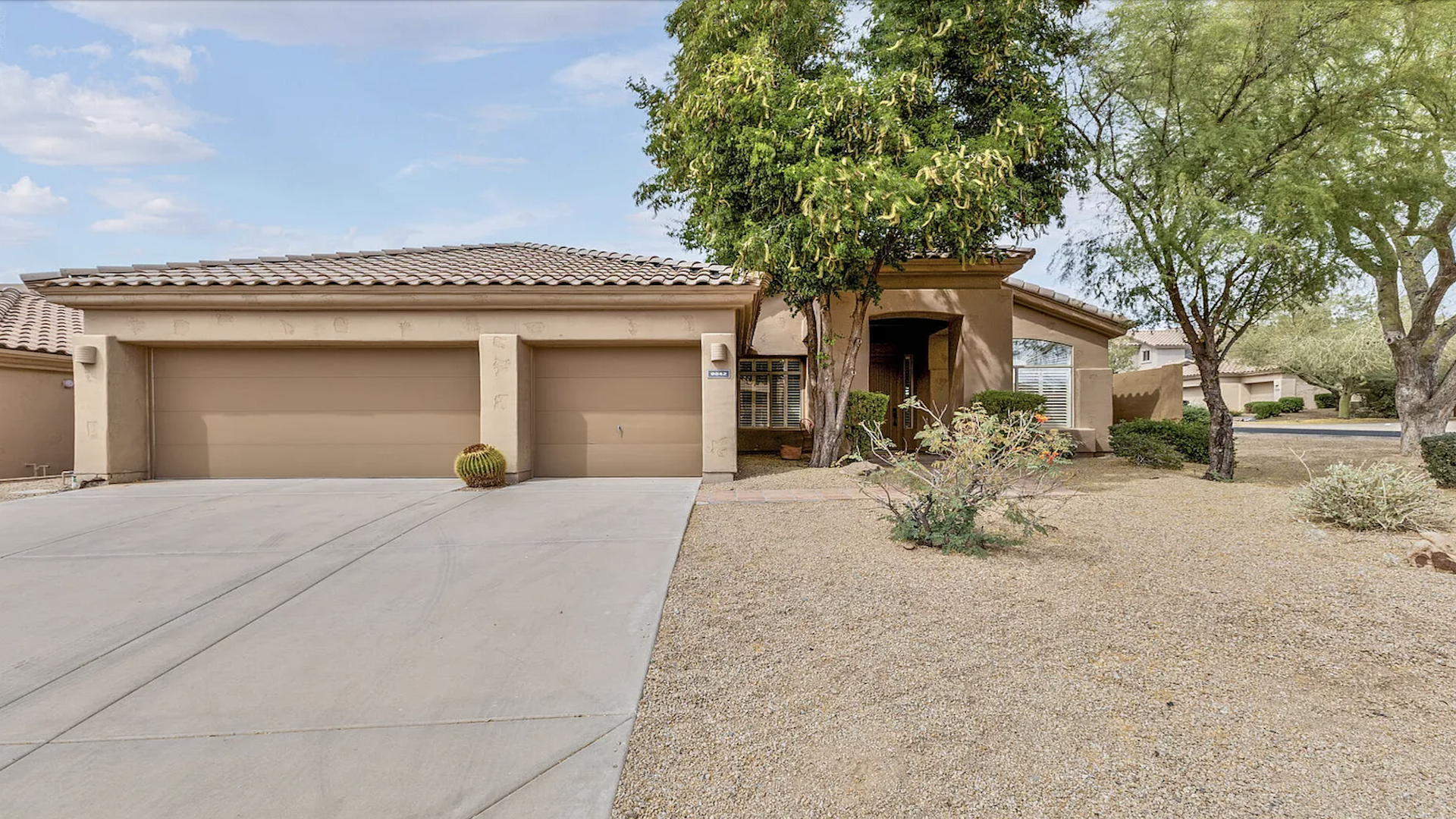
Tile Roof Replacement Cost in Phoenix: 2026 HELOC Guide
The Scout Executive Summary
- A full tile roof replacement in Phoenix runs roughly $10 to $18 per square foot, but most homeowners do not need one. Tile lasts 50 years or more in this climate. The underlayment beneath it fails at 20 to 25 years, and replacing only that costs a fraction of a full tear-off.
- Your insurance policy decides your real number, and many Phoenix policies quietly changed. Insurers have moved older roofs from replacement cost to actual cash value coverage, which can leave you paying half the bill or more on a roof you thought was covered.
- Flat foam sections follow a completely different clock. A foam recoat is scheduled maintenance every five years in Phoenix, and skipping it is what turns a $3,000 job into a $15,000 one.
How Much Does Tile Roof Replacement Cost in Phoenix in 2026?
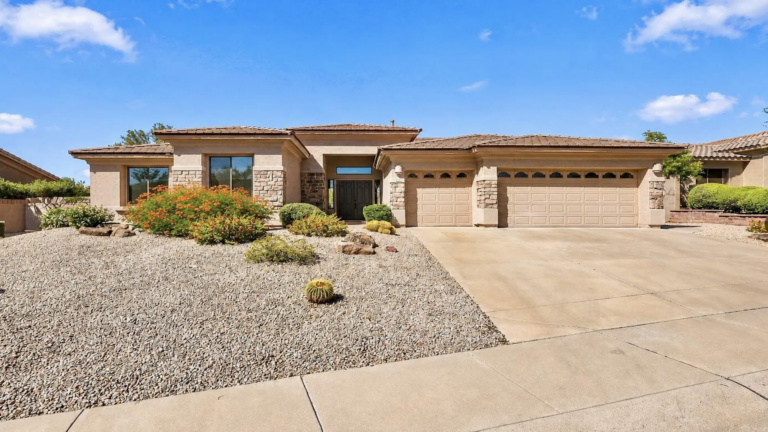
A full tile roof replacement in the Phoenix metro generally runs $10 to $18 per square foot of roof area, which puts a typical home in the $20,000 to $36,000 range. Roof area is not the same as home square footage, so a 2,000 square foot house usually has more than 2,000 square feet of roof once pitch and overhangs are counted.
Not sure how much equity you can pull out? Check online without affecting your credit.
The number moves for reasons that are specific to this market:
- Tile type. Concrete tile is the Valley default. Clay costs more and weighs more.
- Pitch and complexity. Steeper roofs and cut-up rooflines cost more per square foot to work on.
- Decking condition. If water sat under failed underlayment long enough, the sheathing under it may need replacing too, and that is discovered after the tile comes off.
- Timing. Emergency work during monsoon season carries a premium over the same job scheduled in spring.
- Permits. Roof replacement requires a permit in Phoenix and across the Valley, and your licensed contractor should pull it.
Phoenix sun is a real cost driver rather than a talking point. Intense UV exposure degrades roofing materials noticeably faster here than the national average, which is why Valley roofs move through their maintenance cycles sooner than the manufacturer’s rated life suggests.
Do You Need a New Roof or Just New Underlayment?
Most Phoenix tile roofs that leak do not need new tile, and this single question is worth more money than every other decision in this article. Tile itself can last 50 years or longer. The underlayment beneath it, which is the waterproof membrane doing the actual work, typically fails at 20 to 25 years in this climate.
Curious if a HELOC fits your budget? Estimate your rate today.
That means the tile you already own may be perfectly good while the layer under it has quietly failed. Roofers handle this with a lift and relay, sometimes called a lift and reset: they remove your existing tile, stack it, replace the underlayment, then put the same tile back.
Per square foot of roof area
Bars show the high end of each range. Phoenix tile lasts 50 years or more. The underlayment beneath it fails at 20 to 25, which is why most leaking tile roofs do not need new tile.
On a 2,000 square foot roof, choosing a lift and relay over a full replacement is commonly a savings of 30% to 40%. That is the difference between borrowing $20,000 and borrowing $32,000, on the same house, for the same leak.
Some tile breakage during a lift and relay is normal and expected. A good contractor budgets for replacement tiles and installs them in less visible areas so the roof still looks uniform from the street.
The question to ask every bidder: “What percentage of my tile is reusable, and what does a lift and relay cost compared to full replacement?” A contractor who will not answer that directly, or who quotes only a full tear-off without discussing the option, is worth a second opinion. Replacing more than roughly 20% to 30% of the tile starts to shift the math back toward full replacement.
This guide is part of our Emergency Access series. If it is your air conditioning rather than your roof, that companion guide walks through the same financing timeline.
What Does a Flat Foam Roof Cost to Recoat or Replace?
A foam recoat runs about $1.00 to $3.50 per square foot while a full foam replacement runs about $6 to $12, which is why the recoat is the single most important maintenance decision a Phoenix homeowner with a flat section makes. Spray polyurethane foam is the dominant flat roofing system in this market, and many Valley homes carry tile on the pitched sections and foam over a flat patio, addition, or garage.
Planning for a major expense? Check your HELOC eligibility online.
Foam roofs work differently from tile. The foam itself is protected by a coating, and the Phoenix UV index breaks that coating down on roughly a five year cycle. Recoat on schedule and the foam underneath stays sound more or less indefinitely. Skip it and sun starts degrading the foam itself, at which point you are no longer buying a coating, you are buying a roof.
Flat foam roof, two very different bills
Recoat on schedule
roughly every five years in Phoenix
What it costs
- About $1.00 to $3.50 per square foot
- Commonly $2,000 to $5,000
- Small enough to handle without touching equity
Replace after neglect
once sun has degraded the foam itself
What it costs
- About $6 to $12 per square foot
- Commonly $9,000 to $18,000 and up
- Large enough to need financing
The coating is what protects the foam. Recoat on time and the foam underneath stays sound more or less indefinitely. Skip it and you stop buying a coating and start buying a roof.
This matters for financing because a recoat is usually small enough to handle without touching your home equity, while a replacement is not. If you are already opening a line of credit for tile work, pricing the foam recoat at the same time is often the cheapest thing on the entire quote.
🐿️ Scout’s Tip: If your roof is aging but not failing, open the line of credit now rather than during monsoon season. A HELOC costs nothing to keep open at most lenders when you are not drawing on it, and having it available means you can schedule roof work in spring at spring prices instead of paying an emergency premium in August. Our Arizona home equity rates page tracks current HELOC and home equity loan pricing for local homeowners.
Will Insurance Pay for Your Phoenix Roof?
Insurance generally covers sudden storm damage and generally does not cover age or wear, and the difference between those two categories is where most Phoenix roof claims are won or lost. Monsoon wind, hail, and falling debris are typically covered events. Underlayment that gave out after 22 years of desert sun is typically not, because adjusters classify that as normal aging.
Don’t want to wait weeks for bank approval? Check your online rate instantly.
The bigger issue is how your policy pays when a claim is covered. There are two ways.
Replacement Cost Value (RCV) pays what it costs to replace your roof today, minus your deductible, regardless of the roof’s age.
Actual Cash Value (ACV) pays the depreciated value of the roof you had. On an older roof, that is a much smaller number.
Here is the gap in practice. Take a tile roof that costs $22,000 to replace and is 16 years old against a 30 year rated life. Under ACV, an insurer applying depreciation of about 53% pays roughly $10,340 and you cover the remaining $11,660 plus your deductible. Under RCV, the insurer pays the full $22,000 minus the deductible. Same storm, same roof, roughly an $11,000 difference in what you need to borrow.
16-year-old tile roof, $22,000 to replace
-
Replacement cost value (RCV)
$22,000 -
Actual cash value (ACV)
$22,000
- Paid by your insurer
- Paid by you before your deductible
Same storm, same roof. Under ACV an insurer applying about 53% depreciation pays roughly $10,340 and you cover $11,660 plus your deductible. Check your declarations page to find out which one you have.
This is not hypothetical for Valley homeowners. Arizona does not require insurers to use replacement cost valuation for roofs, and insurers have increasingly added actual cash value endorsements for older roofs, often at renewal. Many homeowners find out which coverage they actually have only when the settlement offer arrives.
Do this before you need it: pull your declarations page and find out whether your roof is covered at RCV or ACV, and note your deductible, including whether it is a flat dollar amount or a percentage of your insured value. If you are on ACV with an aging roof, ask your agent what moving to RCV would cost. The premium difference is often modest relative to an eleven thousand dollar gap.
Two more practical notes. Document damage with dated photos immediately after a storm, before any repair, because that documentation is what separates a covered storm claim from a denied wear-and-tear claim. And be cautious with out-of-state contractors who canvass Valley neighborhoods after every significant monsoon event. Verify Arizona ROC licensing at azroc.gov before signing anything.
Can You Use a HELOC for an Emergency Roof Replacement?
Yes, and for most Valley homeowners the equity is comfortably there. A HELOC is a revolving line of credit secured by your home. You draw against it as the work progresses and pay interest only on what you have taken out, which fits a roof job billed in deposit and completion stages.
Curious how much equity you can unlock? Check your rate in minutes.
Here is the math on a typical Phoenix-area home:
- Home value: $560,000
- First mortgage balance: $330,000
- At an 80% cap: $448,000 total allowed, minus $330,000, leaves $118,000
- At an 85% cap: $476,000 total allowed, minus $330,000, leaves $146,000
Even a full tile replacement plus foam work fits inside that with room left. Combined loan-to-value, or CLTV, is every loan against your home added together and divided by what the home is worth. Most Arizona lenders cap it at 80% to 85%.
For scale, $25,000 drawn at 7.25% runs about $151 a month during the draw period when you are paying interest only, and about $228 a month once repayment begins on a 15 year schedule. Rates are variable, so both figures move with the prime rate.
The catch is timing, and it is the same catch that applies to any home equity borrowing during an emergency. A HELOC takes roughly two to six weeks to fund, and federal law adds a three business day cancellation window on a line secured by your primary residence that no lender can skip. A roof actively leaking during monsoon season cannot wait that long, which is why the sequence in the next section matters more than the financing itself.
One roof-specific advantage worth knowing: an insurance claim takes time too. If your damage is covered, the claim process and the HELOC timeline often run in parallel, so starting both on the same day frequently means the money and the settlement arrive close together.
🐿️ Scout’s Tip: If your policy came back as actual cash value and you are facing a five figure gap on a roof you cannot delay, a Home Equity Investment is worth pricing alongside the HELOC. An HEI provides cash with no monthly payment at all in exchange for a share of your home’s future value, and it qualifies on equity rather than income. The tradeoff is real: you give up future appreciation, and an HEI is no faster than a HELOC, so it belongs in the planning conversation rather than the emergency one.
Splitero requires no income verification and pre-qualifying takes about two minutes without affecting your credit. Be clear-eyed about the tradeoff: you give up future appreciation, and an HEI is not fast enough for a true emergency either, so it belongs in the same planning conversation as the HELOC rather than the panic one.
Featured Partners · No Monthly Payments

- Qualify in minutes. No credit impact.
- Close in as little as 3 weeks1
- Access up to $600,000

- MaturityMatch™ term alignment
- Keep your low-rate mortgage
- Access up to $500,000
1 “Close in as little as 3 weeks” reflects the average timeline under standard conditions. Actual timelines vary based on documentation, title, property location, and local recording or notarization requirements. Timing is not guaranteed.
Terms and conditions apply. Not all homeowners will qualify. Not available in all states. NMLS #1993600, www.nmlsconsumeraccess.org. See nada.co for complete details.
What Should You Do the Week Your Roof Starts Leaking?
Stop the water, document everything, then finance the gap. Doing those in the wrong order is what costs people money, because once a repair is made the evidence an adjuster needs is gone.
Thinking about unlocking your home’s equity? Find your rate online.
- Get an emergency tarp on it. Most Valley roofing companies will tarp a failing roof quickly and cheaply. This is not the repair, it is the thing that stops interior damage from compounding while everything else plays out.
- Photograph and video the damage before anyone touches it. Date stamps, multiple angles, and interior water damage as well as the roof itself. Note the storm and the date. This documentation is the single strongest thing you control in a claim.
- Pull your declarations page. Find out today whether you have RCV or ACV and what your deductible is. This determines the size of the hole you are financing.
- File the claim before you commit to a contractor. Have a licensed roofer present for the adjuster’s inspection if you can. Do not rely on the adjuster’s assessment alone.
- Get three bids, and ask each one the lift and relay question. This is where the largest single savings on the entire project lives.
- Start the HELOC application the same week. Not after the claim settles. Running both clocks at once is the whole point, and you are under no obligation to draw on a line once it is open.
The mistake to avoid is signing with the first contractor who knocks on the door after a storm and financing the whole amount through them, before you know whether insurance covers it and before anyone has told you your tile is reusable. Those two unknowns routinely move the number by five figures.
Frequently Asked Questions
Roughly $10 to $18 per square foot of roof area for a full replacement, which lands most homes between $20,000 and $36,000. A lift and relay, where your existing tile is removed and reset over new underlayment, runs about $8 to $12 per square foot and commonly saves 30% to 40%.
Typically 20 to 25 years in the Phoenix climate, well short of the tile above it, which can last 50 years or more. Intense UV exposure and heat age the underlayment faster here than in milder markets, which is why underlayment replacement is a normal part of owning a Valley tile roof rather than a sign something went wrong.
Generally yes for sudden storm, wind, hail, or falling debris damage, and generally no for age-related wear. How much you receive depends on whether your policy pays replacement cost or actual cash value, and on your roof’s age. Check your declarations page rather than assuming.
About every five years. The Phoenix UV index breaks down the protective coating faster than in most markets, and recoating on schedule is what keeps the foam underneath sound. A recoat commonly costs $2,000 to $5,000 against a replacement that can run $9,000 to $18,000 or more.
A HELOC suits a roof where the final number is uncertain, which is most of them, because decking damage is discovered after the tile comes off. A home equity loan suits a signed fixed-price contract where you want the same payment for the whole term.
Usually not for the same week. Expect two to six weeks, with a mandatory three business day cancellation window before funds release. Tarp the roof to stop the damage, then let the HELOC and any insurance claim run on parallel clocks.
Not necessarily, but get an honest assessment of the underlayment across the whole roof rather than just the leaking area. Underlayment installed at the same time tends to fail at the same time, so a spot repair on a 22 year old roof often buys months rather than years.
EquitySquirrel is an educational resource operated by Scout Media LLC, not a lender, insurer, or roofing contractor. This content does not constitute financial, legal, insurance, or tax advice. Costs, HELOC rates, lender terms, and insurance policy terms vary and change; confirm all current figures directly. Cost figures are metro estimates and not a quote for any specific property. Insurance examples are illustrative; your coverage, depreciation schedule, and deductible are governed by your own policy. Verify Arizona ROC licensing at azroc.gov before hiring any contractor. Consult a licensed financial professional before making decisions about your home equity. Aleksandra Kadzielawski, Lic #SA694336000.