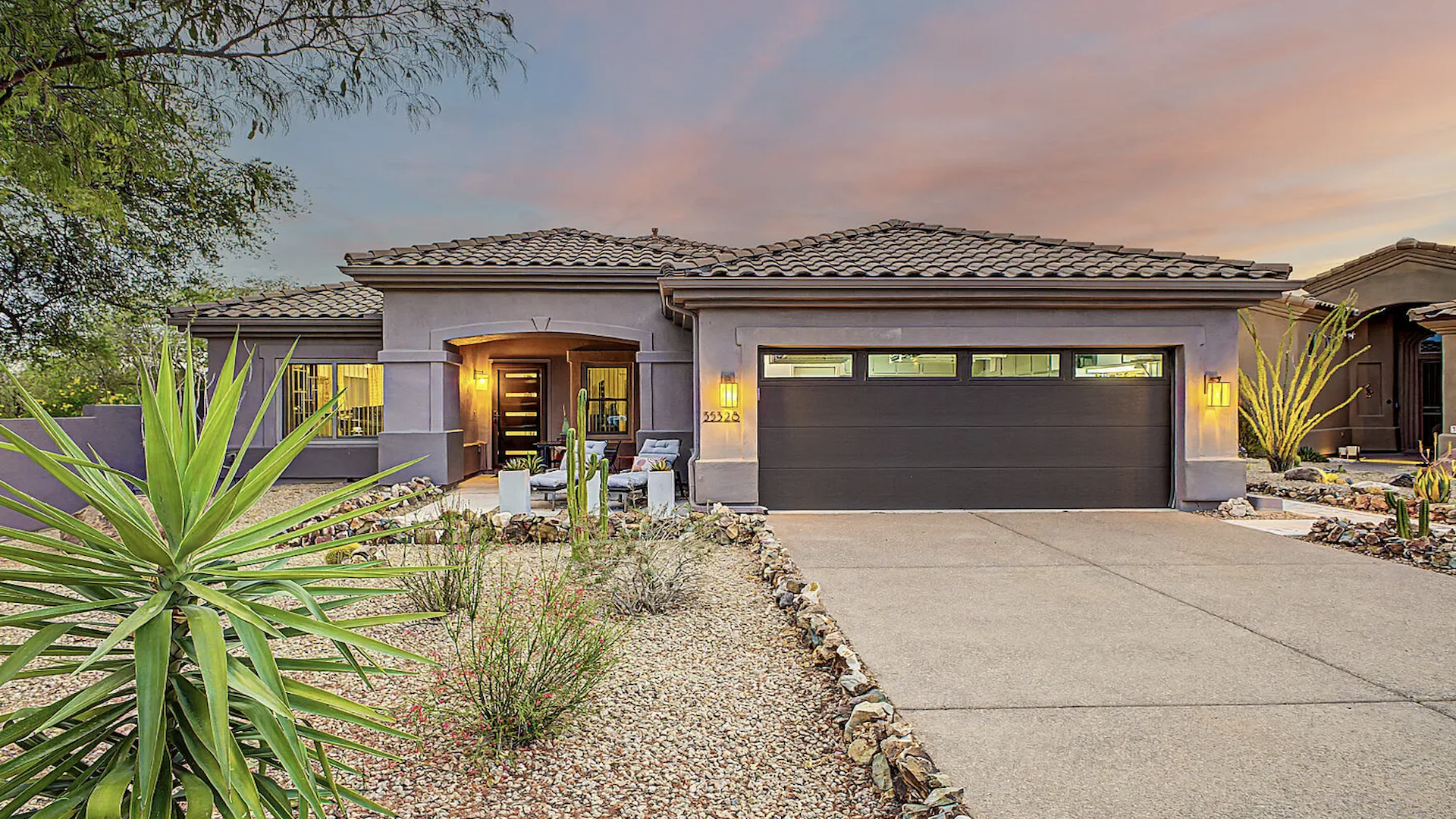
Using a HELOC to Buy a Second Home in Arizona: 2026 Guide
The Scout Executive Summary
- The Core Strategy: You can leverage a Home Equity Line of Credit (HELOC) on your primary residence as a down payment to purchase a second home in Arizona. The primary home secures the HELOC, while a separate mortgage secures the vacation property.
- The Primary Hurdle: Income, not equity, stalls most deals. Lenders require your primary mortgage, the new HELOC payment, and the second home’s full housing cost (PITI) to fit under a 43% Debt-to-Income (DTI) ratio.
- The Timing Trap: Primary HELOCs carry a mandatory federal 3-day right of rescission plus 2 to 6 weeks of processing time. You must open the line before writing a purchase contract.
In this Article
- Can You Use a HELOC to Buy a Second Home in Arizona?
- How Does Using a HELOC for a Down Payment Work?
- Will Your Debt-to-Income Ratio Support Both Mortgages?
- How Much Do You Need to Put Down on an Arizona Second Home?
- When Should You Open the HELOC Before Buying?
- Will a Lender Accept a HELOC as Your Down Payment Source?
- What Are the Risks of Buying With Borrowed Equity?
- Frequently Asked Questions
Primary Residence HELOC vs. Second Home HELOC: Key Differences
| Feature / Standard | HELOC on Primary (To Buy Second Home) | HELOC Secured directly on Second Home |
|---|---|---|
| Securing Property | Primary Home | Vacation / Second Home |
| Primary Purpose | Fund down payment for new purchase | Tap equity on property you already own |
| Max CLTV Cap | 80% to 85% | 70% to 80% (more restrictive) |
| 3-Day Right of Rescission? | Yes (Federal law applies) | No (Non-primary home exempt) |
| Binding Limitation | Income (DTI under 43%) | Available Equity |
| Property at Risk | Your main residence | The second/vacation property |
Already own the second home and want to borrow against it? That is a different product with different rules. Read HELOC on a second home in Arizona instead.
Can You Use a HELOC to Buy a Second Home in Arizona?
Yes. Using primary home equity to purchase a second home is one of the most effective strategies for Arizona homeowners who locked in ultra-low mortgage rates prior to 2022.
Thinking about unlocking your home’s equity? Find your rate online.
Instead of replacing a 3% or 4% primary mortgage via a cash-out refinance, a HELOC sits in a second lien position, leaving your low first-mortgage rate intact while releasing liquid cash for the down payment.
Same product, opposite rules
HELOC on your primary home
the house you live in secures the line
What that means
- Used to buy a second property
- Three day cancellation window applies
- CLTV cap commonly 80% to 85%
- Binding constraint is your income
- At risk: the home you live in
HELOC on the second home
the vacation property secures the line
What that means
- Used to tap a place you already own
- No three day cancellation window
- CLTV cap commonly 75% to 80%
- Binding constraint is your equity
- At risk: the second property
This guide covers the first column. If you already own the second home and want to borrow against it, read HELOC on a second home in Arizona instead.
Arizona produces this situation constantly. Phoenix and Tucson residents buy in Flagstaff, Sedona, Prescott, Payson, Pinetop-Lakeside, or on the water at Lake Havasu. The primary residence has appreciated substantially since 2020, the equity is real, and the second property is the goal.
One Arizona detail to plan for early: this is a community property state, so if you are married, expect most lenders to require both spouses to consent to or sign for the HELOC, even if only one name is on the deed.
How Does Using a HELOC for a Down Payment Work?
To execute this strategy without risking earnest money, you must complete these steps in strict chronological order:
Not sure how much equity you can pull out? Check online without affecting your credit.
- Open a HELOC secured by your primary residence. This is underwritten on your current home, your income, and your credit.
- Draw the down payment amount when you are ready to close on the second property.
- Apply for a separate mortgage on the second home, which is underwritten on its own terms as a second home or investment property.
- Close, using the HELOC funds as your down payment and the new mortgage for the balance.
- Carry three obligations: your primary mortgage, the HELOC payment, and the second home mortgage.
That fifth step is where most of the difficulty lives, and it is the part homeowners underestimate. You are not swapping one debt for another. You are adding two.
The structural advantage is that a HELOC gives you cash rather than a contingency. You are not asking a seller to wait while you sell something else or liquidate investments in a market you do not control. In a competitive listing that matters.
Will Your Debt-to-Income Ratio Support Both Mortgages?
The single most common reason a HELOC-backed second home purchase fails is the 43% Debt-to-Income (DTI) ceiling. When underwriting your second home mortgage, the lender must tally three simultaneous housing debts:
Curious if a HELOC fits your budget? Estimate your rate today.
- Your current primary mortgage payment (PITI).
- The newly added HELOC payment (calculated on the drawn balance or full line).
- The new second home mortgage payment (PITI + HOA fees).
Case Study: Phoenix Homeowner Buying a $650,000 Sedona Vacation Home
- Primary Residence (Phoenix): Appraised at $620,000 with an existing $310,000 first mortgage.
- Max HELOC Equity Available (at 85% CLTV): $527,000 max total debt − $310,000 first mortgage = $217,000 available equity line.
- Sedona Purchase: $650,000 purchase price requiring a 20% down payment ($130,000).
| Monthly Obligation | Amount |
|---|---|
| Primary Phoenix Mortgage (PITI) | $2,300 |
| HELOC Payment ($130k draw @ 7.25% Interest-Only) | $785 |
| Second Home Mortgage ($520k @ 6.75% + PITI) | $3,973 |
| Auto Loans & Other Personal Debt | $600 |
| TOTAL MONTHLY OBLIGATION | $7,658 |
Monthly obligations, $14,000 gross income
-
What a 43% debt-to-income limit allows
$6,020 -
What this purchase would actually cost you
$7,658
- Primary mortgage $2,300
- HELOC payment $785
- Second home PITI $3,973
- Other debts $600
$1,638 over the line, on a file with $217,000 of untouched equity available. Clearing 43% here would take roughly $17,800 a month, or about $214,000 a year. Your equity qualifies the HELOC; your income qualifies the purchase.
At a $14,000 monthly income, that is a 54.7% debt-to-income ratio and the answer is no. To land under 43% you would need roughly $17,800 a month, or about $214,000 a year.
Same buyer, same house, and $217,000 of untouched equity sitting there unusable. That is the whole lesson of this strategy: your equity qualifies the HELOC, but your income qualifies the purchase.
Two things can move the math. If you plan to rent the property and can produce a signed lease, some lenders count a portion of projected rent, commonly around 75%, against the carrying cost. And paying down other debt before you apply frees room dollar for dollar, which on a marginal file is often the cheapest fix available.
🐿️ Scout’s Tip: Get a lender to run your DTI with all three payments included before you shop for the second home, not after you are under contract. The number either works or it does not, and finding out early costs you nothing while finding out late costs you an earnest deposit. Our Arizona home equity rates page tracks current HELOC and home equity loan pricing for local homeowners, which is what you need to price the middle payment in that stack.
How Much Do You Need to Put Down on an Arizona Second Home?
Plan on 10% at an absolute minimum, with 15% to 20% far more realistic for decent pricing. Second home mortgages are underwritten more strictly than primary residence loans across the board.
Planning for a major expense? Check your HELOC eligibility online.
- Second home, conventional: 10% minimum, though 15% to 20% typically gets meaningfully better terms, and weaker credit or higher DTI can push a lender to require 20% or more
- Investment property: commonly 20% to 25%
- Credit: roughly 680 or better for the second home mortgage, with 720 and up earning the best pricing on both that loan and the HELOC
- Cash reserves: expect to document several months of payments on both properties after closing
The classification question matters here just as much as it does when borrowing against a property you already own. If you intend to rent the Sedona place out on a platform for much of the year, your lender may treat it as an investment property, which raises the down payment, raises the rate, and shrinks the lender list. Be straight about your intended use from the first conversation. Misrepresenting occupancy on a loan application is loan fraud.
One more Arizona cost to build into your budget rather than discover later: a second home is Legal Class 4 for Arizona property tax purposes, not Class 3. Both classes assess at the same 10% ratio, but Class 3 receives the Homeowner Rebate that shows on the bill as State Aid to Education and Class 4 does not. Your new property will carry a higher effective tax bill than the identical house next door that someone lives in full time, and that number goes straight into the DTI calculation above.
When Should You Open the HELOC Before Buying?
You should secure and finalize your HELOC before putting an offer on a second home. This is the single most common timing mistake and it has a hard, non-negotiable component.
Don’t want to wait weeks for bank approval? Check your online rate instantly.
A HELOC secured by your primary residence takes roughly two to six weeks from application to funding. On top of that, federal law gives you a three business day right to cancel a loan secured by your principal dwelling, and no lender can release funds until that window closes.
Stack those against a typical 30 day purchase contract and the math gets uncomfortable fast. If you sign a contract on a Flagstaff cabin and only then start the HELOC application, you are betting your earnest money on a process that routinely takes longer than your closing date.
Worth noting because it surprises people: this cancellation window applies precisely because the HELOC is on your primary residence. If you were instead borrowing against a second home you already owned, that rule would not apply at all. Same product, opposite treatment, decided entirely by which property secures the line.
The practical sequence:
- Get the HELOC approved and open before you make offers
- Confirm with your lender how quickly you can draw once the line is live
- Tell the second home lender the HELOC exists, because it will appear on your credit and in your DTI regardless
- Do not draw until you need the funds, since you pay interest only on what you have taken
There is no cost to holding an open, undrawn line at most lenders, which makes early approval close to free optionality.
Will a Lender Accept a HELOC as Your Down Payment Source?
Yes, in most cases. Because HELOC proceeds are secured by real property equity, conventional mortgage lenders treat them as acceptable source funds, unlike unsecured personal loans.
Curious how much equity you can unlock? Check your rate in minutes.
The distinction that generally matters is secured versus unsecured. Funds drawn from a HELOC are secured by real estate you own, which most lenders treat differently from an unsecured personal loan or a cash advance. That said, policies vary, and some lenders do push back on borrowed down payments regardless of source.
Ask these three questions of your second home lender before you draw anything:
- Do you accept HELOC proceeds as a down payment source on a second home?
- How do you want the draw documented and seasoned?
- How will you calculate the HELOC payment in my debt-to-income ratio, on the drawn balance or the full credit limit?
That third question can decide the file on its own. Some lenders count the payment on what you have actually drawn, while others calculate against the full available limit. If your line is larger than what you plan to use, that difference can be the reason a marginal DTI passes or fails.
🐿️ Scout’s Tip: If your equity is strong but the debt-to-income math will not clear, a Home Equity Investment is worth pricing before you give up on the purchase. An HEI provides cash against your primary residence with no monthly payment, so there is no HELOC payment to add to the middle of that DTI stack. Our guide walks through the HEI route to a second property. Splitero qualifies on equity rather than income and pre-qualifying takes about two minutes without affecting your credit.
Splitero requires no income verification and pre-qualifying takes about two minutes without affecting your credit. Be clear-eyed about the tradeoff: you give up future appreciation, and an HEI is not fast enough for a true emergency either, so it belongs in the same planning conversation as the HELOC rather than the panic one.
What Are the Risks of Buying With Borrowed Equity?
Leveraging primary home equity introduces distinct financial risks:
Thinking about unlocking your home’s equity? Find your rate online.
- Primary Residence Exposure: You are pledging your primary residence as collateral to finance a secondary home. Defaulting on the HELOC puts your primary shelter at risk.
- Variable Rate Sensitivity: Most HELOCs feature variable interest rates tied to the Prime Rate. A 100 to 200 basis point rate increase directly inflates your monthly obligation.
- Draw Period Reset: When the initial interest-only draw period ends (typically after 10 years), the line converts to fully amortizing principal and interest payments, causing a sharp payment jump.
None of this makes the strategy wrong. It makes it a strategy that needs margin. If the DTI only clears on optimistic assumptions, the honest read is that the purchase is premature rather than that the financing is wrong.
Where this strategy lands
Strong equity and income that clears 43% with margin
The strategy works as designed. You keep a low first mortgage rate, buy without a sale contingency, and carry three obligations you can absorb if rates move.
Strong equity, income that clears only on optimistic assumptions
Paying down other debts frees room dollar for dollar. A signed lease can bring rental income into the calculation. A no-monthly-payment product removes the middle payment entirely. All three are worth pricing before you abandon the purchase.
Strong equity, income well short of 43%
Not financeable as structured, and no amount of equity changes that. The honest read is that the purchase is early rather than that you found the wrong lender.
Figures throughout are illustrations on stated assumptions, not quotes. Run your own numbers with a lender before making offers.
HELOC to Buy a Second Home in Arizona: Frequently Asked Questions
Yes. You open the line against your primary residence, draw the down payment, and take a separate mortgage on the new property. It is a common way to buy without giving up a low first mortgage rate. The usual obstacle is not equity but your debt-to-income ratio once all three payments are counted.
Most Arizona HELOC lenders cap combined loan-to-value at 80% to 85%, so you generally need at least 15% to 20% equity remaining after the HELOC. On a $620,000 home with a $310,000 mortgage, an 85% cap leaves roughly $217,000 available.
Yes. The second home lender counts your primary mortgage, the HELOC payment, and the new property’s full housing cost, and generally wants the total under about 43% of gross income. Ask whether they calculate the HELOC payment on the drawn balance or the full credit limit, because the answer can decide a marginal file.
A primary residence HELOC typically takes 2 to 6 weeks to process, plus a mandatory 3-business-day federal right of rescission period before funds can be drawn.
For most Arizona homeowners holding a rate below about 5%, the HELOC wins because it leaves that first mortgage alone. A cash-out refinance replaces it entirely. The refinance becomes more competitive only when your current rate is already near or above market.
Often yes, but expect a larger down payment, commonly 20% to 25%, a higher rate, and a shorter list of willing lenders. If the property will be rented, be direct about that from the start rather than describing it as a second home.
Then the purchase is not financeable as structured, regardless of how much equity you hold. Options include a larger down payment to shrink the second mortgage, paying down other debts first, producing a signed lease if the property will be rented, or waiting. Pricing a no-monthly-payment product against the HELOC is also worth doing before you abandon the plan.
EquitySquirrel is an educational resource operated by Scout Media LLC, not a lender or law firm. This content does not constitute financial, legal, or tax advice. Lending requirements, rates, down payment minimums, and underwriting policies vary by lender and change frequently; confirm current terms directly. Payment figures are illustrations based on stated assumptions, not quotes, and your actual numbers will differ. Statements about Arizona property tax classification are general background; confirm with your county assessor. Misrepresenting occupancy on a loan application may constitute loan fraud. Consult a licensed financial professional before making decisions about your home equity. Aleksandra Kadzielawski, Lic #SA694336000.