HEI Risk Adjustment Explained: Why Your Starting Value Is Lower Than Your Appraisal
The Scout Executive Summary
- Your starting value is a contract number, not what your home is worth. Some HEI companies set the line they measure growth from below your appraisal. Unison publishes a 5% discount, and Point’s own pricing examples use a discount in the high 20s.
- You don’t lose the whole gap, but you pay a share of it. The cost of the discount is the company’s share times the gap, and on a home that holds its value, that dollar amount doesn’t shrink no matter how long you wait.
- No discount doesn’t mean no cushion. Companies that start from your full appraised value build a similar head start into a multiplier, so test every offer by asking what you’d owe if your home’s value never changed.
In this Article
- What Is an HEI Risk Adjustment?
- Why Is Your HEI Starting Value Lower Than Your Appraisal?
- What Risk Adjustment Does Each HEI Company Use?
- Does the Risk Adjustment Reduce the Cash You Get?
- How Much Does a Risk Adjustment Cost You?
- Is No Risk Adjustment Always the Better Deal?
- How Does the Risk Adjustment Change Your Annualized Cost?
- Does the Risk Adjustment Protect You If Home Prices Fall?
- What Can You Do If the Appraisal Comes In Low?
- Frequently Asked Questions
Your appraisal says your home is worth $500,000. Your home equity investment offer says the agreement starts at $365,000. That $135,000 gap is the moment many homeowners stop and wonder whether something went wrong.
Usually nothing did. The gap is a risk adjustment, one of the least explained parts of a home equity investment (HEI). This guide shows what it is, why companies use it, what it really costs you in dollars, and how to compare it against offers that skip the discount entirely.
What Is an HEI Risk Adjustment?
An HEI risk adjustment is a discount a home equity investment company takes off your appraised value to set the starting value it measures your home’s growth from.
Your offer can carry two different home values:
- Appraised value: what an independent appraiser says your home is worth today.
- Starting value: the number the contract uses as its starting line. Point calls it the Appreciation Starting Value. Unison calls it the Original Agreed Value.
When you settle, the company compares your home’s value at that time with the starting value. Everything above the starting line counts as growth, and the company takes its agreed share of that growth. A lower starting line means more of your home’s value counts as growth, including value that was already there the day you signed.
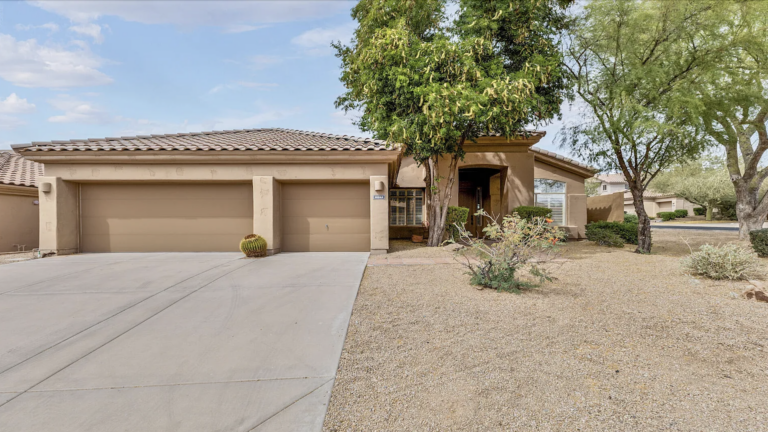
Here is how that looks on a $500,000 home in Mesa. With a 27% risk adjustment, the starting value is $365,000, so $135,000 of today’s value is treated as growth from day one. With a 5% adjustment, the starting value is $475,000, and $25,000 is treated as growth.
The Consumer Financial Protection Bureau (CFPB) describes the same feature in its 2025 market overview of home equity contracts. Its example sets the starting value 25% below the appraisal, which keeps the company ahead unless the home’s price falls by more than 25%.
Risk adjustments matter most in agreements that pay the company a share of your home’s growth, the model Point and Unison use. Companies that take a share of your home’s total value usually start from the full appraisal and build their cushion into a multiplier instead, which our guide to the HEI exchange rate covers in detail.
Featured Partners · No Monthly Payments

- Up to 30 years to settle
- Credit scores starting at ~600+
- Access up to $600,000

Home Equity Agreement (HEA)
- Use cash for anything
- 500+ credit score. No income requirements.
- Pre-qualify in under 2 minutes. No credit impact.

- Qualify in minutes. No credit impact.
- Close in as little as 3 weeks1
- Works for second homes and rentals

- Qualify in minutes
- Dedicated Investment Manager
- Access up to $600,000

- Up to 30 years to settle with MaturityMatch™
- Keep your low-rate mortgage
- Check eligibility with no credit impact
Unlock: In exchange for cash upfront, you give a share of the future value of your home. Not all homeowners will qualify. Not available in all states. Terms and conditions apply. Home Equity Agreements offered by Unlock Home Equity Solutions Inc. (NMLS #2657081).
Nada: 1“Close in as little as 3 weeks” reflects the average timeline under standard conditions. Actual timelines vary based on documentation, title, property location, and local recording or notarization requirements. Timing is not guaranteed. Terms and conditions apply. Not all homeowners will qualify. Not available in all states. Nada Loans LLC, NMLS #1993600.
Why Is Your HEI Starting Value Lower Than Your Appraisal?
Your starting value is lower because the company collects no monthly payments and wants a cushion that pays it back even if your home doesn’t grow.
Pre-qualify with Unlock in under 2 minutes with no impact on your credit →
The companies that use a risk adjustment give a few reasons for it:
- It waits years to get paid. Point says it uses the lower number to help offset the risk it takes by not requiring monthly payments, and that the gap gives it a cushion if your home doesn’t appreciate as expected.
- One appraisal can be off. Unison says its 5% adjustment accounts for the uncertainty in any single appraisal and lets it fund faster without paying for several appraisals.
- It pays for other features. Point’s pricing page says the adjustment helps offset short-term price swings, protects its original investment, and makes it possible to let you settle early without a penalty. The lower line is also the point where Point starts sharing losses with you.
How the number is set for each homeowner is less clear. Point’s pricing page lists a 29% risk adjustment, but its own worked example, a $365,000 starting value on a $500,000 home, works out to 27%. Several independent reviews report that Point’s adjustment can vary with factors like credit and existing mortgage balance, and Point does not publish a formula.
The short version: the risk adjustment is the company’s built-in head start. It isn’t a penalty for something you did, and it isn’t a sign your appraisal was wrong.
What Risk Adjustment Does Each HEI Company Use?
Unison is the only major company that publishes one fixed risk adjustment. Point shows a discount in its examples, and Unlock, Hometap, Nada, and Splitero price through a share of your home’s total value instead.
Sets an Appreciation Starting Value below the appraisal. Its pricing page footnote cites a 29% adjustment, while its worked example uses $365,000 on a $500,000 home, about 27%. Your offer sets your exact figure.
Original Agreed Value equals the appraised value minus a 5% Risk Adjustment.
Starting Home Value equals the independent valuation, with no discount. Pricing comes from its exchange rate (1.8 in its published example) and an Annual Cost Limit typically set at 19.9%.
Takes a share of your home’s value at settlement, using a 1.65x multiplier within five years and 1.80x after, per its June 2026 pricing. Ask whether your starting value matches your appraisal.
Uses an exchange rate that starts at 1.85 on its pricing page. Ask how your initial value is set.
Sets a Split Percentage of your home’s future value, priced per offer, with no standard figure published. Ask how your starting value compares with your appraisal.
Provider terms checked November 2026 against each company’s public pages. Terms change, and your written offer governs.
Want to compare an exchange-rate offer? Nada has no minimum income requirement and lets you pre-qualify in minutes with no credit impact. Check your eligibility with Nada →
If you’re weighing the two companies with the biggest gap in starting values, our Point vs. Unison comparison runs them head to head.
Does the Risk Adjustment Reduce the Cash You Get?
In the published examples from Point and Unison, no: your cash is figured from the full appraised value, and the risk adjustment only changes what you owe later.
Point’s own example gives a homeowner $50,000 on a $500,000 home, which is 10% of the appraised value, while the contract starts at $365,000. Unison’s program guide says it figures the initial payment from your appraised value without the risk adjustment applied.
So the adjustment isn’t money taken out at closing. Fees come out of your cash separately. Point lists a processing fee of up to 4.9% with a $2,000 minimum, plus third-party costs like the appraisal and escrow.
What the adjustment does is add to your settlement amount. It’s a cost you pay later, not one you skip.
Unlock takes a different route and starts from your full appraised value with no discount, building its pricing into a multiplier instead. Pre-qualify with Unlock in under 2 minutes with no impact on your credit →
How much cash you can take is also limited by how much equity you must keep, which our guide to HEI equity requirements explains. Before you sign, confirm your offer shows the appraised value, the starting value, and your cash in dollars.
How Much Does a Risk Adjustment Cost You?
A risk adjustment costs you the company’s share percentage times the gap between your appraisal and your starting value, not the whole gap.
Pre-qualify in under 2 minutes with no impact on your credit →
Go back to the $500,000 Mesa home. Say the agreement has a 27% risk adjustment and gives the company 30% of your home’s growth. The gap is $135,000, and 30% of $135,000 is $40,500. That $40,500 is what the discount adds to your bill. You don’t owe the full $135,000.
Now take the same home with a 5% adjustment and a 40% share of growth. The gap is $25,000, and 40% of it is $10,000. Unison’s investor percentage typically runs about four times the share of home value it funds, which is why a 10% cash amount pairs with a 40% share in this example.
Here is the part most people miss. As long as your home stays above the starting value, the extra dollars from the discount don’t change with the market. Whether your home grows $100,000 or nothing at all, the 27% agreement above still carries the same $40,500 for the head start. Any real growth costs you extra on top of it.
The no-growth test makes this easy to see. Ask: if my home is worth exactly its appraised value on the day I settle, what do I owe?
Starts at: $475,000
Owed if your home’s value never changes: $60,000
Starts at: $365,000
Owed if your home’s value never changes: $90,500
Starts at: $500,000
Owed if your home’s value never changes: $90,000
Each row uses a $500,000 home and $50,000 in cash. In the first two rows, you owe the $50,000 back plus the company’s share of the gap. In the third row, you owe 18% of your home’s value, which is $90,000.
These are illustrations, not any company’s offer. The 30% share comes from the example in Point’s help center, not from a Point contract. Figures are before fees and before any cost cap, and a cap can lower what you owe in the early years.
Run the no-growth test on a real offer. Unlock publishes its exchange rate and starts from your full appraised value, so you can check the math against any discounted offer. See your Unlock estimate with no impact on your credit →
Is No Risk Adjustment Always the Better Deal?
No. Companies that start from your full appraised value build a similar head start into a multiplier, so an offer with no discount can owe about as much on a flat home as one with a large discount.
Unlock says it never applies a discount to the home value set by its valuation. Its pricing comes from a multiplier instead: its published cost example uses an exchange rate of 1.8, so cash equal to 10% of your home’s value becomes an 18% share at settlement. Hometap‘s June 2026 pricing uses a 1.65x multiplier if you settle within five years and 1.80x after that. Nada‘s pricing page lists an exchange rate starting at 1.85.
Look at the table above again. On a home that never changes in value, the 1.8 multiplier owes $90,000 and the 27% discount owes $90,500. The two contracts look nothing alike on paper and land almost in the same place.
They split apart as your home grows, because each one charges for growth differently. A share-of-growth agreement takes its percentage of each new dollar of value. A share-of-value agreement takes its percentage of the whole home. If the same $500,000 home grows 3% a year for 10 years, to about $671,958:
- The 27% adjustment with a 30% share owes about $142,087.
- The 1.8 multiplier owes about $120,952.
- The 5% adjustment with a 40% share owes about $128,783.
In these examples, the small discount with a large share owes the least on a flat home, and the share-of-value setup owes the least at 3% growth. A different growth rate, settlement year, or cost cap can change that order. The better deal still depends on the written offers, including the funding amount, starting value, fees, settlement formula, and timing of the buyout.
The CFPB notes that some observers think a discounted starting value may be easier for homeowners to understand than a multiplier, because the head start is printed as a dollar figure. Either way, the no-growth test puts both kinds of offers on the same footing.
Illustrations exclude fees, caps, and any improvement or maintenance adjustments. Multipliers and exchange rates are each company’s published examples as of November 2026; your offer sets your actual figures.
Scout’s Tip
If a large starting-value discount is the part of an offer that bothers you, get a quote from a company that starts at your full appraisal and compare the two with the no-growth test. Unlock says it never discounts its home valuation and publishes its exchange rate and cost limit, so the math takes one line. See what Unlock could offer with no impact to your credit.
Featured Partners · No Monthly Payments
- Up to 30 years to settle
- Credit scores starting at ~600+
- Access up to $600,000
Home Equity Agreement (HEA)
- Use cash for anything
- 500+ credit score. No income requirements.
- Pre-qualify in under 2 minutes. No credit impact.
- Qualify in minutes. No credit impact.
- Close in as little as 3 weeks1
- Works for second homes and rentals
- Qualify in minutes
- Dedicated Investment Manager
- Access up to $600,000
- Up to 30 years to settle with MaturityMatch™
- Keep your low-rate mortgage
- Check eligibility with no credit impact
Unlock: In exchange for cash upfront, you give a share of the future value of your home. Not all homeowners will qualify. Not available in all states. Terms and conditions apply. Home Equity Agreements offered by Unlock Home Equity Solutions Inc. (NMLS #2657081).
Nada: 1“Close in as little as 3 weeks” reflects the average timeline under standard conditions. Actual timelines vary based on documentation, title, property location, and local recording or notarization requirements. Timing is not guaranteed. Terms and conditions apply. Not all homeowners will qualify. Not available in all states. Nada Loans LLC, NMLS #1993600.
How Does the Risk Adjustment Change Your Annualized Cost?
Because a risk adjustment adds a fixed dollar amount from day one, it pushes your annualized cost highest in the early years, and that cost fades the longer you hold the agreement.
Pre-qualify with Unlock in under 2 minutes with no impact on your credit →
An HEI has no stated interest rate, but you can still compare it with borrowing. Ask what yearly growth rate would turn the cash you received into the amount you owe. That gives you an illustrative annualized cost.
Take the flat-home case, where the discount is the only thing driving the bill. Under the 27% adjustment and 30% share, you’d owe $90,500 on $50,000:
- Settle in year 3: about 21.9% a year
- Settle in year 5: about 12.6% a year
- Settle in year 10: about 6.1% a year
Under the 5% adjustment and 40% share, the same flat home works out to about 6.3%, 3.7%, and 1.8% a year. Your home didn’t grow at all in either case. Every dollar of that cost came from the starting-value discount.
This is why cost caps matter most early. Point says its Homeowner Protection Cap often applies in the first years, because measuring growth from below your appraisal can make it look like your home grew more than it did. The CFPB found that several companies cap their return around 18% to 20% a year, compounded monthly, and that without those caps, many settlement amounts would start 25% to 100% above the cash the homeowner received. In the year-3 example above, a cap like that would likely set your bill instead of the formula. Learn more about how a cost cap works and the real price of settling early.
Fees push every one of these figures higher. After a 4.9% fee, you’d receive $47,550 instead of $50,000, while the amount you owe stays the same.
Annualized figures are illustrative, measured on $50,000 before fees and caps, with no change in home value.
Scout’s Tip
If you can handle a monthly payment, a HELOC or home equity loan gives you a real interest rate to compare against these numbers. Our Arizona home equity rates page tracks current local pricing, and our HEI vs. HELOC cost comparison runs the full math side by side.
Does the Risk Adjustment Protect You If Home Prices Fall?
Only after your home falls below the starting value, and with a large adjustment that takes a large drop.
Point says that if your home’s value falls below the Appreciation Starting Value, it takes a smaller share and you may owe less than you received. With a $365,000 starting value on a $500,000 home, that means a drop of more than 27% before you owe less than your $50,000. Until then, a falling home value lowers your bill but the head start stays in place.
Unison shares losses below its 5% line, but not during its early restriction period and not if you buy Unison out instead of selling. Check which restriction period your agreement uses.
Share-of-value agreements work differently, since the company’s percentage applies to whatever your home is worth. With an 18% share, you’d owe less than $50,000 only if your home fell below about $277,800, a drop of roughly 44%. Hometap’s share is a percentage of your home’s value at settlement, so the amount you owe falls if your home’s value falls.
For the full range of scenarios, see what happens to an HEI when home values drop.
What Can You Do If the Appraisal Comes In Low?
Challenge it before you sign, because a low appraisal shrinks your cash and, under a starting-value discount, lowers your starting line too.
Say the appraisal comes in at $480,000 on a home that’s really worth $500,000. At 10%, your cash drops from $50,000 to $48,000. With a 27% adjustment, your starting value drops from $365,000 to $350,400. That extra $14,600 of “growth” adds about $4,380 to your bill at a 30% share. You get less money and owe a little more for it.
Steps worth taking before you accept an offer:
- Read the full appraisal report. Check the square footage, bedroom and bathroom count, lot size, and the comparable sales the appraiser used.
- Send your improvements in writing. List upgrades with dates and costs. In the Phoenix area, an owned solar system, a permitted casita, or a remodeled pool are worth calling out.
- Offer better comparable sales. Recent nearby sales of similar homes carry the most weight.
- Ask for a reconsideration of value or a second appraisal. Unison’s program guide says either side can request a reconsideration, and Unlock’s product guide describes a reconsideration or added appraisal, then arbitration if you still disagree.
- Don’t sign while the value is in dispute. Get the final appraised value, starting value, and cash amount in dollars first.
Getting a second opinion on value? Unlock starts its agreement from the independent valuation with no discount applied. Check what Unlock could offer with no impact on your credit →
Before You Sign
Ask every company for these answers in writing: your appraised value and your starting value in dollars, your share percentage or multiplier, and what you would owe at 3, 5, and 10 years if your home’s value never changes, with and without any cost cap. Then ask at what home value you would owe less than the cash you received.
Compare offers using the same cash amount and a few home-price scenarios. For a full checklist, see our questions to ask before a home equity investment.
HEI Risk Adjustment Frequently Asked Questions
No. A risk adjustment doesn’t come out of your cash at closing the way an origination fee does. It lowers the starting value used to measure your home’s growth, so it raises the amount you owe when you settle.
There’s no published way to negotiate it. Unison applies the same 5% adjustment to every agreement, and Point doesn’t publish how it sets its figure. What you can change is the appraisal behind it, by challenging a low value before you sign, and you can compare offers from companies that price differently.
Point sets an Appreciation Starting Value below your appraised value to offset the risk of collecting no monthly payments. Your appraisal still sets your cash amount. The lower starting value only affects how much growth Point shares in when you settle.
It may with some companies, but none publish a credit-based formula. Several reviews report that Point’s adjustment can vary with credit and existing mortgage debt. Unison uses a flat 5% but requires a credit score of about 620 to qualify.
No. The starting value stays the same no matter when you settle. Settling early can make the discount more expensive on a yearly basis, although a cost cap may limit what you owe in the first years.
Not always. A company with a small discount may take a larger share of your home’s growth, and on a fast-rising home that larger share can outweigh the smaller discount. Compare the full settlement amount in dollars, not the discount alone.
How We Verified This Guide
We checked these sources on November 5, 2026: Point’s HEI pricing page and help center articles on the Appreciation Starting Value; Unison’s FAQ and Homeowner Program Guide; Unlock’s FAQs and What It Costs page; Hometap’s June 2026 pricing announcement; and the CFPB’s January 2025 market overview of home equity contracts. We did not review executed contracts. Where a company does not publish a figure, we say so and ask you to confirm it in your written offer.
EquitySquirrel is an educational resource operated by Scout Media LLC, not a lender or HEI provider. This content does not constitute financial, legal, or investment advice. All settlement figures are illustrations, not quotes. HEI terms vary by provider and are subject to change; confirm current terms directly. Consult a licensed financial professional before making decisions about your home equity. Aleksandra Kadzielawski, Lic #SA694336000.