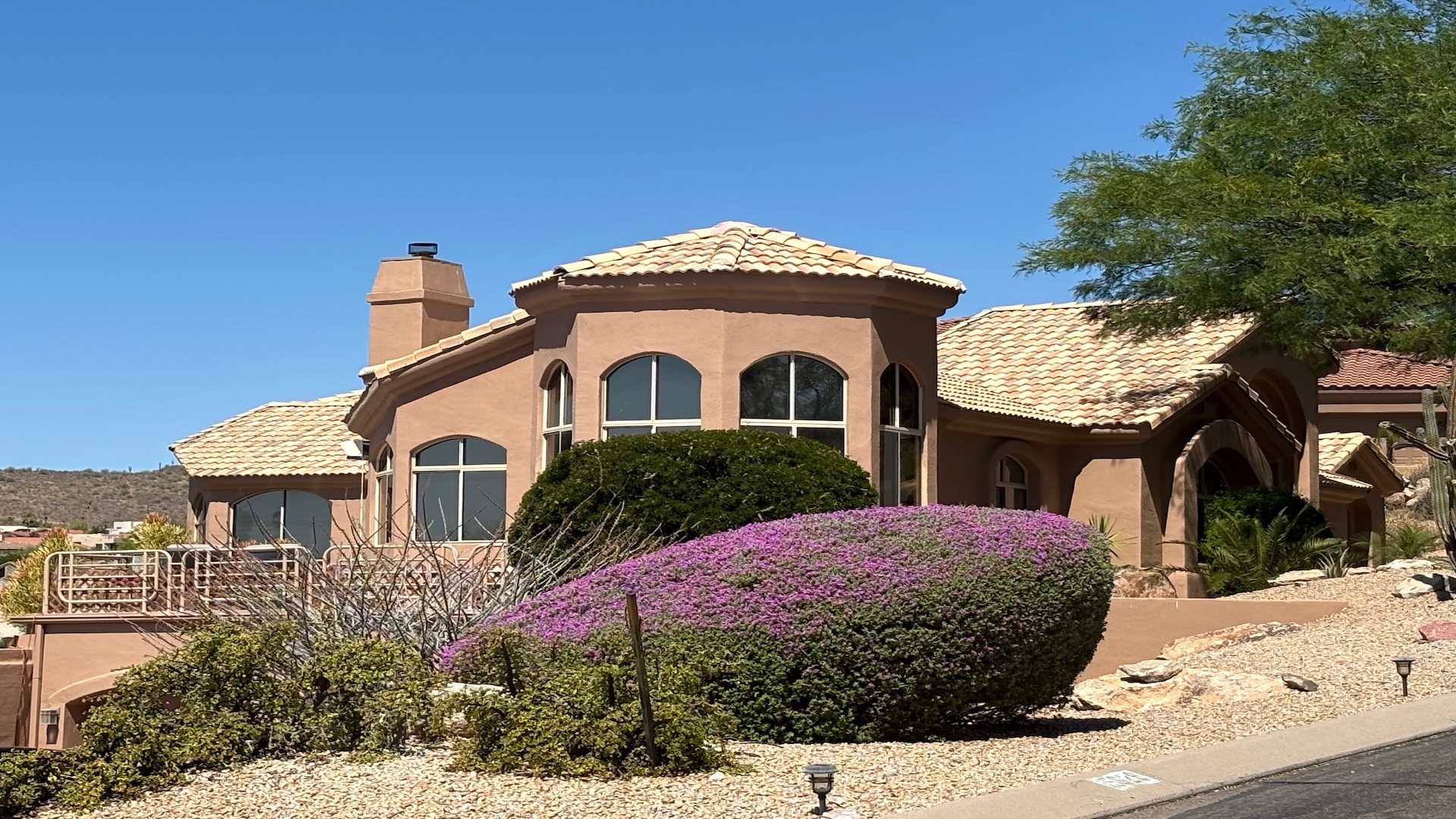
Arizona Casita Financing: How to Fund an ADU Without Raising Your Rate
The Scout Executive Summary
- A cash-out refinance costs roughly $545,000 more over thirty years than keeping your rate. Swapping a locked 3.25% mortgage for a 2026 market rate adds about $1,500 to the monthly payment, and you never get the old rate back.
- Your income documentation decides between a HELOC and an HEI. If you can document income, a HELOC funds the build with interest-only milestone draws and leaves your mortgage untouched. If you cannot, an HEI funds it with no monthly payment in exchange for a share of your home’s future value.
- If your current equity does not cover the build, none of those options will stretch. Every home equity product lends against what your home is worth today. Only construction financing lends against what it will be worth with the casita finished.
- Arizona law now protects both the build and the tax bill. HB 2720 and HB 2928 give Valley homeowners the right to build and rent a casita up to 1,000 square feet, and Proposition 117 caps assessed value increases at 5% per year.
You have a contractor, a floor plan, and the equity to build it. The only question is how to fund the casita while keeping the mortgage rate you spent years protecting. This guide covers the three options that preserve your 3% mortgage and the one that does not.
In this Article
- The Real Cost of Using a Cash-Out Refinance to Fund an Arizona Casita
- What Does an Arizona Casita Actually Cost in 2026?
- Comparing Your Arizona Casita Financing Options
- How Does HEI Casita Financing Work for Self-Employed Homeowners?
- What Are the Arizona ADU Rules Under HB 2720?
- Arizona Casita Financing: Common Questions
What Does a Cash-Out Refinance Really Cost to Fund a Casita?
A cash-out refinance to fund a casita costs a rate-locked Arizona homeowner roughly $545,000 more over thirty years than a HELOC, because it replaces your mortgage rate instead of sitting behind it.
A Scottsdale homeowner with a $500,000 mortgage at 3.25% and a $1,000,000 home value who needs $200,000 to build a casita faces this choice:
Option A: Cash-out refinance
New mortgage: $700,000 at 6.24%
New monthly payment: $3,690
Old payment: $2,176
Extra monthly cost: $1,514
Extra 30-year cost: $545,173
Option B: HELOC at 7.25% on $200,000
Primary mortgage: unchanged at $2,176/month
HELOC interest-only: $1,208/month
Extra monthly cost: $1,208
Primary rate: protected at 3.25%
The cash-out refinance costs $545,173 more over 30 years to fund a $200,000 casita. The HELOC costs $1,208 per month, and that payment disappears when you repay the HELOC. The 3.25% mortgage stays forever.
For the full Arizona HELOC guide, see the Arizona HELOC Guide. For the full HEI guide for Arizona homeowners, see our Home Equity Investment Arizona Guide.
For the full rate protection strategy, see the Protect My Rate guide.
What Does an Arizona Casita Actually Cost in 2026?
A detached casita in the Phoenix Valley runs $180,000 to $250,000 for a standard build, with garage conversions starting near $60,000 and luxury builds passing $400,000. Costs have risen with labor and materials over the last few years. Here are the verified 2026 cost tiers for the Phoenix Valley:
| Casita Type | Size | Cost Range | Notes |
|---|---|---|---|
| Garage Conversion | 400 to 600 sq ft | $60,000 to $120,000 | No foundation required, lower cost |
| Attached Addition | 400 to 800 sq ft | $120,000 to $200,000 | Shares wall with main home |
| Detached Casita (Standard) | 500 to 800 sq ft | $180,000 to $250,000 | Full foundation, slab, HVAC |
| Detached Casita (Luxury) | 600 to 1,000 sq ft | $250,000 to $400,000+ | Custom finishes, premium appliances |
Source: Cheyenne Construction AZ 2026. DC Structures Arizona ADU pricing 2026. Fenn Rogers ADU cost guide 2026.
Phoenix Valley, 2026
Bars show the high end of each range. Add ductwork, electrical, and permit costs on top, and confirm current pricing with licensed Maricopa County contractors.
A mid-range 600 sq ft detached casita in Scottsdale costing $200,000 and renting at $2,200 per month generates $26,400 per year in gross income. After expenses, net income of $20,000 to $22,000 per year puts the simple payback period at 9 to 10 years. One expectation to correct before you apply: most lenders will not count projected casita rent toward qualifying you for the financing unless you already have a signed lease or rental history on the property. The income improves your return. It usually does not improve your approval odds.
A well-built $200,000 casita in Scottsdale can push appraised value up by $150,000 to $180,000, adding equity while generating income.
Under Arizona HB 2720, homeowners in cities like Phoenix and Scottsdale can now build ADUs up to 1,000 sq ft and rent them out separately as legal rental units.
Featured Partners · No Monthly Payments
Best Overall

- Qualify in minutes. No credit impact.
- Close in as little as 3 weeks1
- Access up to $600,000

- Flexible credit terms
- Credit scores starting at ~500+
- Access up to $600,000

- MaturityMatch™ term alignment
- Keep your low-rate mortgage
- Access up to $500,000
1 “Close in as little as 3 weeks” reflects the average timeline under standard conditions. Actual timelines vary based on documentation, title, property location, and local recording or notarization requirements. Timing is not guaranteed.
Which Financing Option Is Best for an Arizona Casita?
For most rate-locked Arizona homeowners the choice comes down to income documentation. If you can prove income, a HELOC costs less. If you cannot, an HEI is the path that does not require it.
| Option | Monthly Payment | Touches Primary Mortgage? | Income Required? | Best For |
|---|---|---|---|---|
| Cash-out refinance | $1,514 extra/month | Yes, replaces your rate | W-2 or self-employed | Not recommended for rate-locked homeowners |
| HELOC (7.25%) | $1,208/month IO on $200K | No | Yes, DTI below 43% | W-2 homeowners with strong income |
| Home equity loan (7.53% fixed) | $1,617/month on $200K 15yr | No | Yes, DTI below 43% | Fixed payment preference, known cost |
| Home Equity Investment | $0/month | No | No, equity only | Self-employed, variable income, payment-averse |
The HELOC is often a strong fit for W-2 income homeowners. Interest-only payment during the draw period preserves cash flow. Rate is competitive. Draw only what you need as contractor milestones are hit, a casita build typically requires 3 to 5 payment disbursements over 6 to 12 months.
For self-employed homeowners and payment-averse borrowers, it could be worth to evaluate top HEI providers. No income verification, no monthly payment, no DTI calculation. The trade-off is appreciation sharing, the HEI investor takes a percentage of your home’s future value. In Scottsdale’s high-appreciation market, this cost compounds significantly over the HEI term.
🐿️ Scout’s Tip
Get the permit before you apply for the HELOC. Lenders will not include an unpermitted structure in the home’s appraised value, which means your casita may not add the equity you expect if permits are not in place before the appraisal.
What If Your Equity Does Not Cover the Build?
Then none of the options above will work, and there is a fourth product most casita guides never mention. A HELOC, a home equity loan, and an HEI all lend against what your home is worth today. An ADU construction loan is sized against the as-completed value, meaning what the property will appraise for once the casita is finished.
That difference decides who can build. Take a $700,000 Phoenix home with a $400,000 mortgage and a $200,000 casita. At an 85% cap, a HELOC allows $595,000 of total lending, which leaves $195,000 and falls just short. A construction loan underwritten at 90% of an $850,000 as-completed value supports $765,000, leaving $365,000. Same house, same casita, and only one product reaches.
The trade-offs are real. Construction loans release money in stages after inspections rather than letting you draw freely, your lender approves the contractor, and some construction-to-permanent products replace your first mortgage entirely, which defeats the purpose for a rate-locked homeowner. Ask which structure you are being offered before you go far.
One Arizona timing problem to plan around. Statewide ADU rights only took effect in January 2025, so relatively few Valley homes with permitted casitas have sold yet. An as-completed appraisal has to be supported by comparable sales, and thin comps make that number harder to reach. Ask your lender whether their appraisers have valued ADU projects in your area, and build a contingency into the financing rather than just the budget.
How Does HEI Casita Financing Work for Self-Employed Homeowners?
An HEI qualifies you on your home’s equity rather than your tax returns, which is why it reaches self-employed homeowners that HELOC underwriting turns away. Take a self-employed Scottsdale homeowner with $400,000 in annual revenue but two years of tax returns showing $85,000 in net income after write-offs. The DTI math fails at most traditional lenders. The HEI bypasses income documentation entirely.
Curious if a no monthly payment HEI is right for your situation? Get an estimate today.
Step-by-Step HEI Process:
- Equity Exchange: HEI companies purchase a percentage of your home’s future value in exchange for upfront cash.
- Zero Monthly Obligations: No monthly payment or interest accumulates during the life of the agreement.
- The Settlement: The investor is repaid when you sell the home, refinance, or reach the end of the contract term.
Example Scenario on a $1,000,000 Scottsdale Home:
- HEI Investment: $200,000 (20% of home value)
- Origination Fee (4.5%): $9,000 deducted from proceeds
- Net Liquid Cash to Homeowner: $191,000
- Investor’s Repayment Share at Year 10 (at 8% annual appreciation): Approximately $388,000
The HEI eliminates the monthly payment entirely during the build and stay. However, the cost is paid at settlement, and in Arizona’s high-appreciation market, that settlement cost can be significant. The complete HEI settlement cost analysis on EquitySquirrel is worth reviewing before signing.
Scout’s Tip: If you are self-employed and a HELOC is not realistic, get a read on your numbers before you scale the casita down. An HEI qualifies on your home’s equity rather than your tax returns, and Splitero requires no income verification with a pre-qualification that takes about two minutes and does not affect your credit. Price it against the settlement math above rather than assuming no monthly payment means lower total cost, because in Scottsdale’s appreciation market it often does not.
Nada requires no income verification and pre-qualifying takes about two minutes without affecting your credit. Be clear-eyed about the tradeoff: you give up future appreciation, and an HEI is not fast enough for a true emergency either, so it belongs in the same planning conversation as the HELOC rather than the panic one.
Featured Partners · No Monthly Payments
Best Overall
- Qualify in minutes. No credit impact.
- Close in as little as 3 weeks1
- Access up to $600,000
- Flexible credit terms
- Credit scores starting at ~500+
- Access up to $600,000
- MaturityMatch™ term alignment
- Keep your low-rate mortgage
- Access up to $500,000
1 “Close in as little as 3 weeks” reflects the average timeline under standard conditions. Actual timelines vary based on documentation, title, property location, and local recording or notarization requirements. Timing is not guaranteed.
Which Arizona Lenders Offer the Most Competitive HELOC Rates?
Arizona credit unions and regional banks generally price HELOCs more competitively than national lenders, and the spread between the best and worst offers in the Valley is wide enough to change what you can afford to build. Credit unions also tend to move faster, commonly one to three weeks from application to funding.
Because casita builds draw in stages, ask specifically whether the lender allows repeat draws through online banking without a new request each time. Our Arizona home equity rates page tracks current HELOC and home equity loan pricing, and our Arizona HELOC lender roundup compares lenders side by side.
What Are the Arizona ADU Rules Under HB 2720?
As of 2026, Arizona house bills HB 2720 and HB 2928 establish “By-Right” development for single-family residential lots. This prevents municipalities from banning casitas (ADUs) or imposing restrictive regulations regarding extra parking, matching exterior designs, or owner-occupancy.
Key rules for Scottsdale and Phoenix Valley homeowners:
- ADUs up to 1,000 sq ft are permitted in most single-family residential zones
- Permitted ADUs with a full kitchen and separate entrance qualify as legal rental units
- Your assessed value can only grow by 5% per year under Proposition 117, limiting tax impact from the new structure
- City ordinances vary, verify current requirements with your local Scottsdale or Maricopa County planning department before design begins
Why Permits Impact Your Arizona Casita Financing
A permitted ADU adds meaningfully more appraised value than an unpermitted guest room. Lenders require the structure to be permitted before including it in the home’s appraised value for HELOC qualification.
Arizona Casita Financing: Common Questions
A HELOC preserves your primary mortgage rate while funding the casita build. Draw only what you need as contractor milestones are hit, you pay interest only on drawn funds. For self-employed homeowners who cannot qualify for a HELOC, a Home Equity Investment funds the casita with no monthly payment and no income verification.
A detached casita in the Phoenix Valley ranges from $180,000 to $250,000 for a standard 500 to 800 sq ft unit. Luxury builds run $250,000 to $400,000 or more. Garage conversions start around $60,000 to $120,000. Verify current pricing directly with licensed Maricopa County contractors.
Yes, through a Home Equity Investment. Most HEI providers fund construction and renovation projects with no income or DTI requirement, because qualification is based on your home’s equity position and value rather than your tax return income. Terms and eligible uses vary by provider, so confirm that construction is an approved use before you plan around it.
Under Arizona Proposition 117, your assessed value can only grow by 5% per year regardless of actual value increases. The tax impact is moderated by this annual cap. Consult a Maricopa County property tax advisor for your specific situation.
Arizona credit union HELOCs typically take 1 to 3 weeks from application to approval and funding. Once established, funds are accessible via online banking for each contractor milestone payment.
For homeowners with W-2 income and a credit score above 680, the HELOC often costs less over time. Arizona’s high appreciation makes HEI settlement costs significant over a 10-year hold. For self-employed homeowners who cannot qualify for a HELOC, the HEI may be worth evaluating as an alternative path.
EquitySquirrel, operated by Scout Media LLC, is an educational resource, not a lender or financial advisor. This content does not constitute financial, legal, or construction advice. Casita construction costs are sourced from published Arizona contractor pricing guides 2026 and are subject to change. HELOC and HEI financing terms vary by lender and provider. Cash-out refinance calculations use illustrative rate assumptions, verify current rates before making financing decisions. HB 2720 and ADU rules are subject to change, verify current requirements with your local planning department. Aleksandra Kadzielawski, Lic #SA694336000